
On the morning of Wednesday March 25th, the Ripple team ventured into the heart of Woodstock to attend the latest “Breakfast onThe Second Floor #InyatheloTalks” hosted by Inyathelo.
Inyathelo aims to create a vibrant democracy in South Africa with a robust and sustainable civil society and higher education sector, supported by a strong local philanthropic movement, rooted in the African cultural heritage of sharing.
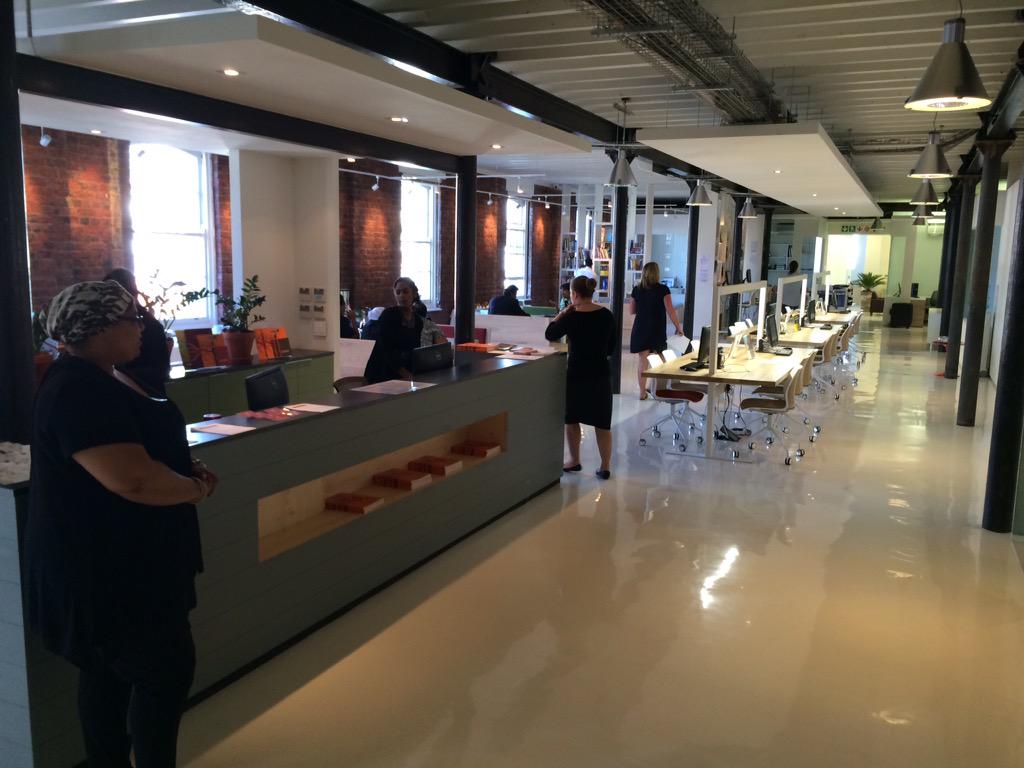
Having recently opened, the Inyathelo ‘Civil Society Sustainability Centre’ is nothing short of gorgeous. Further, they serve as a brilliant creative space for up-and-coming non-profits and civil society members interested in mentorship, assistance, or simply a venue for the afternoon.
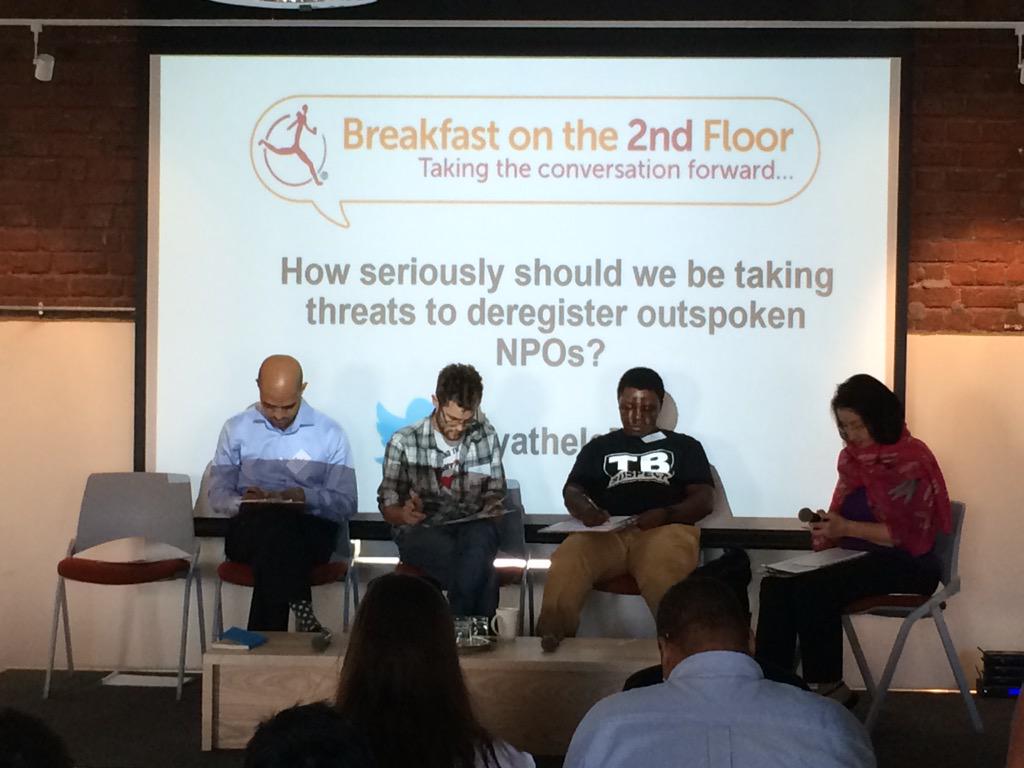
“How seriously should we be taking threats to deregister outspoken NPOs?” was the topic on hand. The timing of this debate could not have been more fitting as weeks before both the ANC Youth League and Women’s league marched to the Treatment Action Campaign (TAC) headquarters, denouncing how they “act as political parties” and demanded that the TAC and other outspoken NPO’s be deregistered.
The discussion’s chair Shelagh Gastrow had penned an insightful Daily Maverick article on these events and contributed a “distinct lack of political education about our Constitution” as their root cause. Panelists for the discussion included:
- Anele Yawa – General Secretary of the Treatment Action Campaign (TAC)
- Murray Hunter – National Coordinator of the Right to Know campaign
- Sheldon Magardie – Attorney at the Legal Resources Centre
- Simbongile Kamtshe – Head of Programmes at the Association of Community Advice Offices of South Africa (ACAOSA)
Anele Yawa began the discussion by disputing the marcher’s logic with a concise, but powerful principle, “We strongly believe political issues are our lives”. In the short time he had, he recounted numerous tales of malfeasance, the lack of accountability, and poor service delivery. He pronounced that Governments (past and present) have time after time tried to thwart the honourable efforts of the TAC – most notably the People’s Health Manifesto. Their goals are all attainable, he insists, but will never be seen through to completion until South Africa develops the political will.
“We strongly believe political issues are our lives” – Anele Yawa
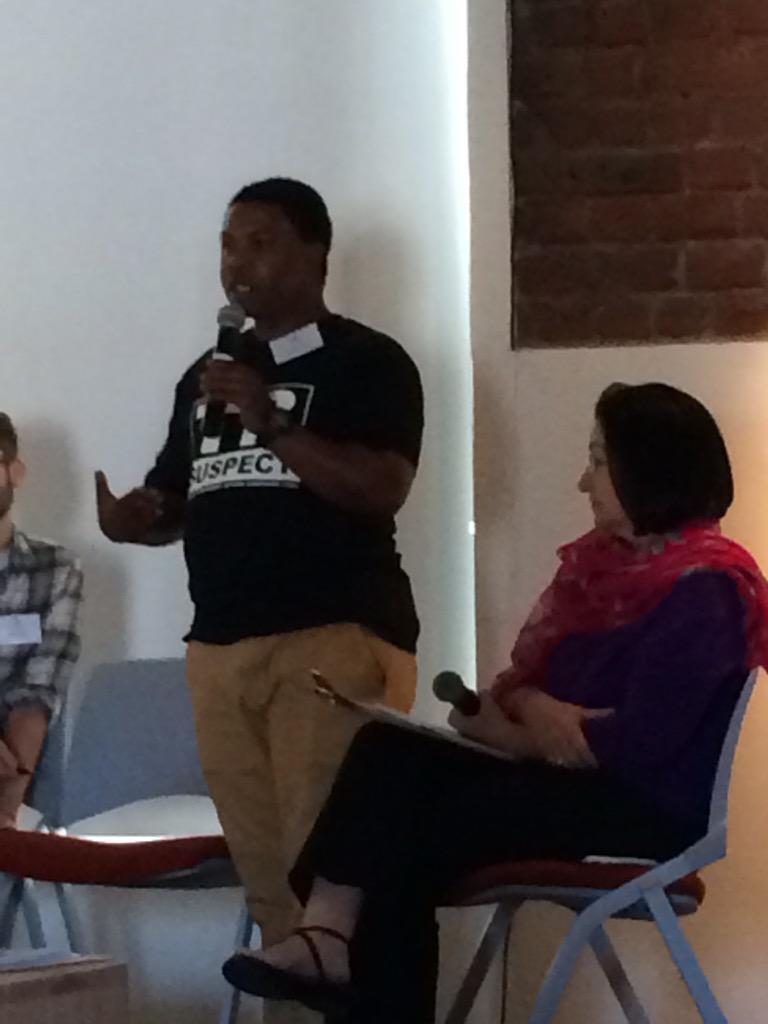
Next up was Murray Hunter, no stranger to the limelight as he is often spearheading vocal demonstrations in his role as Right2Know National Coordinator. Murray’s core concern was with the increased securitisation of the state evident in recent years. He voiced that the way the government is operating is to protect themselves, and not the citizens.
The main example that he sited being the State of The Nation Address’s forced removal earlier this year. He fears for the efficacy of civil society when “any opposition can be volleyed into a physical threat”. These threats along with regulatory meddling are, in his opinion , leading to a climate of political hostility that is prohibiting true fruition of civil society.
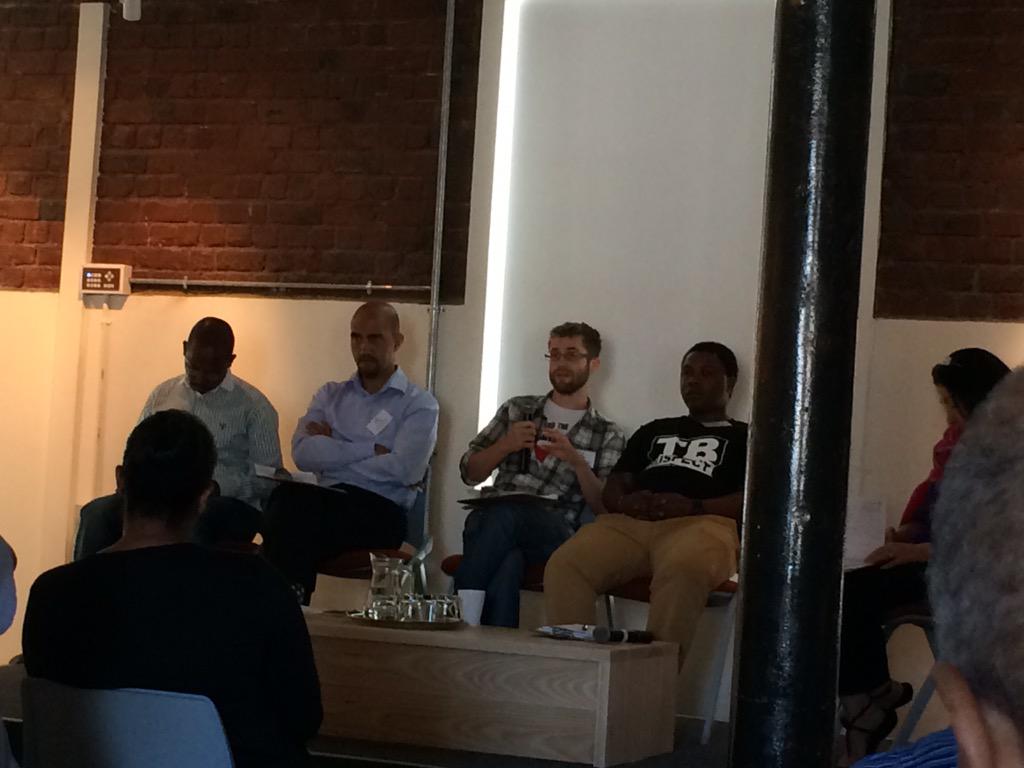
A lot of the discussion was taking place under a legal framework that we had yet to explore, so the next speaker Sheldon Magardie’s experience proved extremely helpful in contextualising the injustice we witness before us. Said legal framework for the civil society is of course the Non Profit Organisation Act that has one guiding principle – the state has an obligation to provide a healthy environment for non-governmental organisations to flourish. An answer to the discussion’s defining question, from a legal stand point, is that being outspoken is not Consitutional cause to deregister an NPO.
“Civil society is the centre of a democratic society”.
Tying everything up was ACAOSA’s Simbongile Kamtshe. He, like much of the audience at this point, was in total agreement with his previous speakers, but decided to look at the matter through a slightly different lens. He went on to say that part of the reason why government is said to be actively impeding on the rights of civil society is because they themselves have little understanding of the legislation and regulations that they are meant to enforce. Instead operating with the misconception that they are the main proponents of a democratic society when in fact “Civil society is the centre of a democratic society”.
As was expected, the many points made bore a lively audience participation . Some outstanding questions arouse asking, “Why can’t our kids understand the constitution like their peers abroad?”, “Why don’t we have more channels available to address these types of issues?”, and “How do we start to mobilise civil society?”. All thoroughly relevant questions with complex answers that would take many more talks to fully cover.
The #InyatheloTalks session did an excellent job of bringing about intellectual dialogue behind such an important matter – furthermore, it was a great opportunity for The Ripple Team to network with other members of civil society and engage with our most pressing concerns. We like to feel that #TheRippleCrowd grew just that bit extra…
For more information about the breakfast and the respective organisations represented visit:


 Ripple.org.za